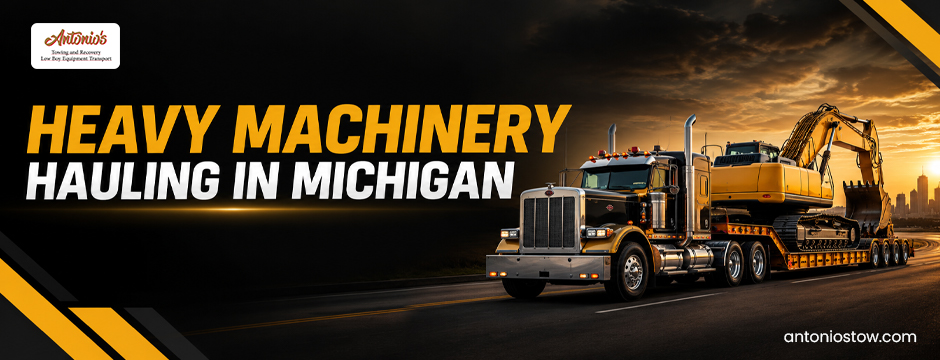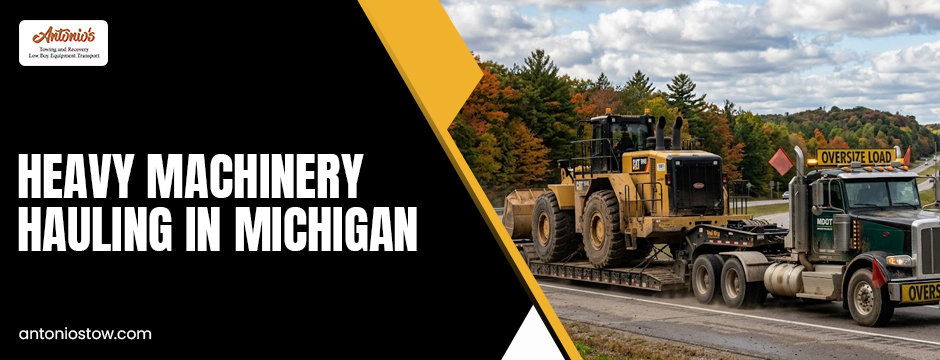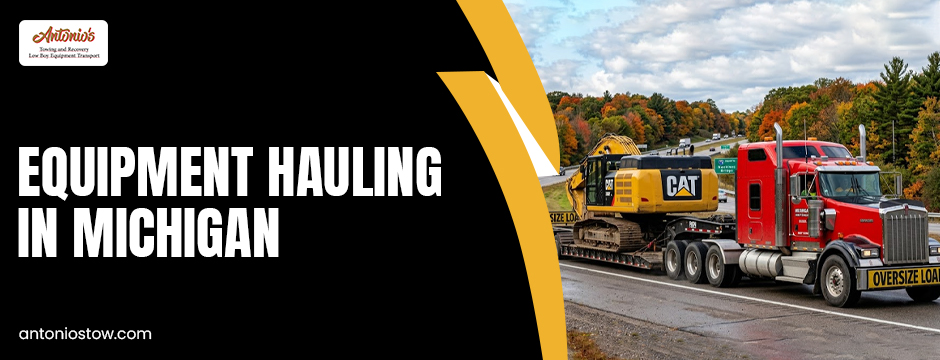
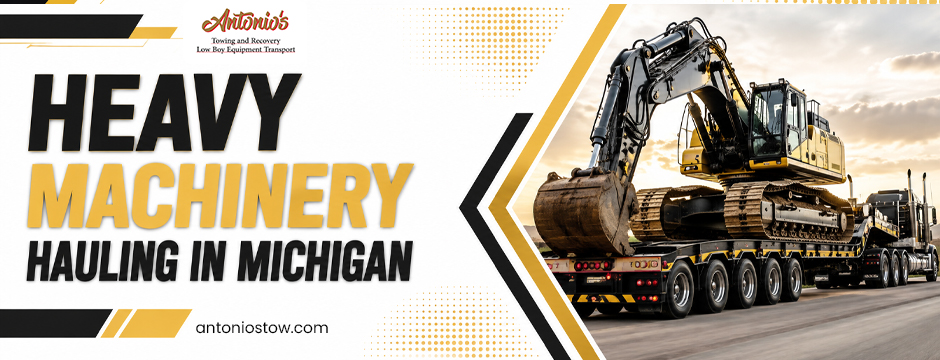
Moving an excavator, bulldozer, crane, or other oversized machine is not the same as shipping ordinary freight. Heavy machinery hauling in Michigan requires careful planning, suitable trailers, trained operators, and compliance with transportation rules. A small mistake in dimensions, route selection, or load securement can create costly delays.
For contractors, manufacturers, farmers, and industrial operators, choosing reliable heavy machinery transportation in Michigan means finding a service that can move valuable equipment safely, legally, and on schedule. This guide explains what to look for in a hauling provider, how the process works, and which questions can help you make a confident choice.

What Does Heavy Machinery Hauling In Michigan Involve?
Heavy machinery hauling in Michigan covers the transportation of large, heavy, or unusually shaped equipment that cannot travel efficiently on a standard trailer. Common loads include excavators, loaders, skid steers, cranes, agricultural machinery, construction vehicles, and industrial components.
The hauling method depends on the machine’s weight, height, length, width, ground clearance, loading points, and center of gravity. A provider should review these details before recommending a trailer. Guesswork is risky, especially when the load may exceed ordinary legal limits.
Why Equipment Details Matter
Start with accurate specifications. Get the machine’s actual operating weight, dimensions, attachments, and center of gravity. Remove detachable parts when practical if doing so reduces the overall transport profile.
Photos can support the hauler’s assessment, but they should not replace verified measurements.
Choosing the Right Trailer
Different machines call for different transport setups. Flatbed trailers are useful for equipment that can be driven or lifted onto an open deck. Lowboy and drop-deck trailers provide a lower loading height, which can help accommodate tall machinery.
For exceptionally heavy loads, specialized heavy-haul equipment may be necessary. The right choice depends on axle capacity, deck dimensions, loading method, and the route.
In heavy machinery hauling in Michigan, a reputable provider should explain why a particular trailer fits the job rather than simply assigning whatever equipment is available.
Permits and Route Planning in Michigan
Oversized and overweight shipments may require permits and route-specific planning. Heavy machinery hauling in Michigan requirements can vary according to the load and roadway involved. Therefore, the carrier should verify applicable rules before departure.
Route planning goes beyond choosing the shortest distance. The team may need to review bridge clearances, road restrictions, construction zones, turns, grades, and utility concerns. Urban deliveries can introduce another challenge: restricted access at the final site.
Consequently, a good route plan considers the entire journey, including loading and unloading locations.
Safe Loading and Securement
For heavy machinery hauling in Michigan, loading is one of the most important stages of the move. The equipment must be positioned correctly, with attention to axle distribution and stability. Ramps, winches, cranes, or other machinery may be used when the equipment cannot safely drive onto the trailer.
After loading, the machine must be secured with appropriate chains, binders, straps, blocking, or other approved methods suited to the cargo. Attachments may require separate attention.
The carrier should inspect the setup before departure and monitor it when conditions warrant. Securement is not merely a formality. It protects the machine, driver, roadway, and other motorists.
What to Look for in a Trusted Hauling Service
When comparing providers for heavy machinery hauling in Michigan, price should not be your only filter. Look for a company with relevant heavy-haul experience, properly maintained equipment, qualified operators, and appropriate insurance coverage. Ask how it handles unusual loads and difficult delivery sites.
Experience with equipment hauling in Michigan can also be valuable because local knowledge may improve route planning and scheduling. A provider familiar with Michigan roads and project conditions may identify practical issues before they become delays.
Questions Worth Asking Before Booking
Before signing an agreement, ask which trailer is planned, who handles permits, how the load will be secured, what insurance applies, and whether escorts or special handling are included. Clear answers show that the carrier has a defined process.
When Specialized Hauling Makes Sense
Not every move needs a specialized heavy-haul setup. Smaller machinery that falls within standard dimensions may be transported with conventional equipment. However, oversized machines need more careful coordination.
Consider specialized hauling when equipment is unusually heavy, tall, wide, long, or difficult to load. It is also useful when the delivery requires lifting assistance or access through constrained industrial or construction sites.
For businesses managing several machines, equipment hauling in Michigan can support project schedules by moving assets between job sites, storage yards, dealers, and facilities. This can reduce idle time and help crews receive the equipment when it is actually needed.
Common Situations That Require Heavy Equipment Transport
Construction is a major use case. Contractors may need excavators, rollers, dozers, and loaders moved between projects. Agricultural businesses may transport large tractors or specialized implements.
Manufacturing and industrial operations can have different needs. Oversized components may require careful loading, route checks, and coordinated delivery windows. Rental companies and dealers may also move machinery between locations.
How to Prepare Your Equipment for Transport
Preparation for heavy machinery hauling in Michigan starts before the truck arrives. Clean the machine so its condition can be inspected easily. Check for loose components, fluid leaks, and removable attachments.
Secure or remove items that could move during transit. Follow the manufacturer’s guidance when preparing hydraulic systems, booms, buckets, blades, or other attachments.
Document the equipment’s condition with dated photographs. Record visible damage before loading. This creates a useful reference for both the owner and carrier.
Next, make sure the pickup and delivery sites are ready. Clear gates, confirm ground conditions, identify overhead obstacles, and ensure there is enough space for the trailer to maneuver.
Red Flags When Comparing Hauling Companies
Be cautious when a provider gives a quote without asking for basic load information. A serious carrier needs to know the machine’s dimensions, weight, pickup location, delivery point, and access conditions.
Vague insurance answers are another warning sign. So are unclear permit responsibilities and unrealistic delivery promises.
A professional company should communicate openly about limitations. If weather, road restrictions, or site access could affect the move, those risks should be discussed rather than hidden.
How to Get a More Accurate Hauling Quote
Provide complete information from the beginning. Include the equipment type, exact dimensions, verified weight, attachments, pickup and delivery addresses, preferred dates, and whether loading assistance is required.
If the machine cannot be driven, say so. Also mention narrow entrances, steep driveways, soft ground, low overhead structures, or other known site restrictions.
Several providers can then compare the same job requirements. This makes quotes for equipment hauling in Michigan easier to evaluate and helps you understand what is actually included.
Final Checklist Before the Move
Use this quick checklist before transportation:
- Confirm the machine’s weight and dimensions.
- Photograph its condition.
- Identify removable attachments.
- Confirm pickup and delivery access.
- Verify permits and route requirements.
- Confirm trailer and securement plans.
- Review insurance coverage.
- Establish contact details for all parties.
- Confirm the delivery window.
- Keep a contingency plan for unexpected delays.
Trusted Heavy Equipment Transport Support from Antonios Tow
When heavy equipment needs to reach its destination safely, experience matters. Antonios Tow brings more than 30 years of industry experience, providing dependable support for heavy machinery hauling, equipment transport, and recovery needs. With short arrival times, honest competitive prices, and zero hidden fees, customers know what to expect. The team delivers friendly, professional service with a strong focus on safety and reliability. Available 24 hours a day, 7 days a week, Antonios Tow is ready when demanding transport needs arise.

Final Thoughts
Reliable heavy machinery hauling in Michigan depends on more than having a large truck. The right provider combines accurate planning, suitable transport equipment, legal compliance, secure loading, trained personnel, and clear communication.
If you are comparing carriers, focus on capability and transparency before choosing the lowest price. A well-planned move protects expensive machinery and helps keep a construction, agricultural, rental, or industrial operation moving.
For dependable support with demanding machinery moves, Antonios Tow can help you discuss your hauling requirements and identify a practical transportation solution.